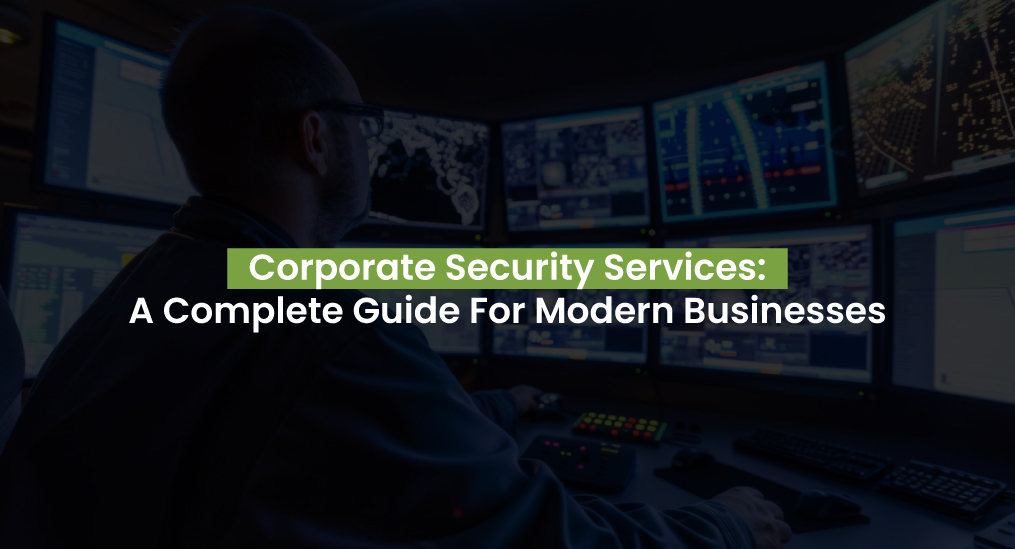
Corporate security protects people, property, information, and business operations through trained personnel, technology, policies, and risk management.
For high-risk government and private sector organizations, security protection is wider than just employing guards at entrances.
It also involves access controls, surveillance, monitoring, emergency planning, and risk assessment.
The goal is to identify threats early, control access, protect critical assets, and support a coordinated response when an incident occurs. The exact security model depends on the facility and its risks.
The security consulting services help organizations identify gaps, define requirements, and build security programs around actual operational needs.
What Is Corporate Security?
Corporate Security is a function that uses people, processes, and technology to protect an organization’s personnel, property, assets, and operations.
It can include several connected programs, such as:
- Physical protection for employees, visitors, facilities, and valuable assets
- Access control systems that restrict entry to authorized people and areas
- Video surveillance that supports monitoring and incident investigation
- Risk assessments that identify threats and security weaknesses
- Emergency response plans for incidents that can disrupt operations
- Security personnel, monitoring teams, and incident response coordination
So, to answer the question, “What is corporate security?”
It is simply a function that identifies, monitors, and deters internal and external threats while managing physical crises and assessing organizational risk.
Corporate Security vs Other Business Security Services
Security requirements are never universal. These vary according to the type of:
- Facility
- Assets
- Workforce
- Operational risks
This means that enterprise security solutions may be different from small-scale corporate security solutions.
| Security Service | Primary Focus | Common Applications | Typical Security Measures |
| Corporate Security | ● People ● Property ● Assets ● Operations | ● Offices ● Headquarters ● Business facilities | ● Guards ● Cameras ● Access control ● Alarms |
| Commercial Security | ● Commercial businesses ● Premises | ● Retail ● Offices ● Commercial properties | ● Cameras ● Alarms ● Access control |
| Industrial Security | ● Facilities ● Equipment ● Workers | ● Factories ● Warehouses ● Plants | ● Perimeter security ● Surveillance |
| Retail Security | ● Loss prevention ● Safety | ● Stores ● Shopping facilities | ● CCTV ● EAS ● Guards ● Monitoring |
| Residential Security | ● Homes ● Residents | ● Houses ● Apartments ● Communities | ● Cameras ● Alarms ● Smart locks |
The distinction is not always absolute. A large organization may use commercial, industrial, and corporate security measures across different sites.
What Do You Mean by Corporate Securities?
The phrase “corporate securities” can refer to financial securities issued by a company, such as stocks or bonds. It should not be confused with corporate security programs that protect people, facilities, assets, and operations.
For example, the National Securities Clearing Corporation, or NSCC, is a financial market clearing agency. The U.S. Securities and Exchange Commission lists NSCC among registered clearing agencies.
This distinction matters because searches for national securities clearing corporation generally relate to financial market infrastructure, not physical security services.
Corporate Security for Different Types of Businesses

1. Corporate Offices
Office security must balance controlled access with normal employee and visitor movement.
Common focus areas include:
- Employees and staff access
- Visitor screening and management
- Main entrances and building entrances
- Meeting rooms and shared areas
- Restricted departments and sensitive spaces
2. Corporate Headquarters
Headquarters often require layered protection because they may contain senior executives, sensitive information, and high-value assets.
Key measures can include:
- Perimeter protection
- Access control
- Surveillance
- Visitor management
- Centralized monitoring.
3. Warehouses and Distribution Centers
Warehouses face different risks because of inventory movement, loading activity, large perimeters, and after-hours operations.
Security planning can focus on:
- Inventory and valuable materials
- Loading and unloading areas
- Employee and contractor access
- Perimeter monitoring
- Security patrol services
- After-hours security
4. Financial and Professional Services
These facilities may require tighter controls around sensitive records, restricted departments, and client areas.
Security measures can include:
- Restricted access
- Visitor management
- Surveillance
- Controlled movement between departments
5. Multi-Location Businesses
Organizations with several facilities often need consistent security policies across locations.
Centralized monitoring can help security teams maintain visibility while allowing individual sites to address local risks.
Why Is Corporate Security Important for Modern Businesses?
Security programs should address specific operational risks rather than simply add more equipment. A documented security risk assessment can help identify which threats require attention and where controls are needed.
Corporate security can help address:
- Unauthorized access
- Theft and property loss
- Workplace violence
- Vandalism
- Employee and visitor safety concerns
- Security breaches
- Internal threats
- Business disruption
- Unauthorized activity in restricted areas
TCS Security identifies risks to people, property, assets, and business continuity as key areas that corporate security programs can manage.
What Does Corporate Security Include?

1. Security Personnel
People remain an important part of physical security.
Technology can detect an event, but trained personnel may be needed to assess and respond to it.
Common roles include:
- Security guards
- On-site officers
- Patrol services
- Reception and security desk personnel
- Visitor management support
2. Video Surveillance
A corporate security camera system can provide visibility across entrances, restricted areas, parking spaces, and other important locations.
A complete system may include:
- Corporate security cameras
- CCTV systems
- Remote video monitoring
- Recording and video storage
- Camera placement and coverage
Camera systems can also support investigations after an incident. A professional application security manager understands that security technology can serve functions beyond traditional protection when properly integrated into operations.
3. Access Control
Access control determines who can enter a facility or specific area.
Common controls include:
- Keycard systems
- Electronic locks
- Biometric access
- Restricted-area controls
- Employee and visitor access management
4. Alarm and Intrusion Detection
Alarm systems provide another layer of protection when unauthorized activity is detected.
They may include:
- Intrusion alarms
- Door and window sensors
- Emergency alerts
- Perimeter detection
5. Security Monitoring
Monitoring connects security information with people responsible for responding to events.
A monitoring program can include:
- 24/7 monitoring
- Alarm monitoring
- Video monitoring
- Incident notifications
- Response coordination
A security operations center can bring these functions together and provide a central point for incident awareness.
6. Security Policies and Procedures
Technology is only effective when personnel know how to use it.
Written procedures should cover:
- Visitor policies
- Emergency procedures
- Access protocols
- Incident reporting
- Employee security procedures
Security Equipment Corporation Businesses May Need
The term security equipment corporation can refer broadly to businesses that manufacture, supply, install, or support physical security equipment.
Organizations should select equipment based on their facility risks rather than simply buying the largest available system.
Potential equipment includes:
- Security cameras
- Video recorders
- Access control systems
- Keycard readers
- Door and gate controls
- Alarm systems
- Motion sensors
- Intercom systems
- Security lighting
- Perimeter security equipment
- Emergency communication systems
Compatibility also matters. Cameras, alarms, access control, and monitoring platforms should work together where the operational security need justifies integration.
How Do Corporate Security Cameras Protect Businesses?

A corporate security camera system can provide continuous visibility in areas where personnel cannot maintain a constant physical presence.
Common uses include:
- Monitoring entrances and exits
- Protecting sensitive areas
- Monitoring parking lots and exterior spaces
- Deterring theft and unauthorized activity
- Supporting incident investigations
- Providing real-time visibility
- Integrating cameras with access control and alarm systems
- Supporting remote monitoring capabilities
Camera placement should be based on risk, not simply on covering as much space as possible. Poor placement can leave blind spots while creating unnecessary recording.
Where Should Corporate Security Cameras Be Installed?
Common locations include:
- Main entrances
- Reception areas
- Parking lots
- Loading docks
- Hallways
- Server rooms
- Storage areas
- Restricted-access areas
- Building perimeters
Privacy, applicable laws, lighting conditions, retention requirements, and access to recorded footage should also be considered during system design.
What Are the Benefits of Corporate Security Services?
A well-designed program should produce measurable operational outcomes rather than simply add more security layers.
Potential outcomes include:
- Improved employee safety
- Stronger access control
- Better visibility across facilities
- Deterrence of unauthorized activity
- Faster incident detection
- Better evidence collection
- Protection of physical assets
- Reduced security gaps
- More organized emergency response
- Greater continuity of business operations
These benefits depend on whether the security program matches the organization’s actual risks and operating environment.
How to Build a Corporate Security Strategy
1. Identify Security Risks
Start by examining the facility, workforce, assets, and operating environment.
Assess:
- Property
- Workforce
- Visitors
- Valuable assets
- Sensitive areas
- Previous incidents
- Location-specific risks
2. Determine Security Requirements
Once risks are documented, determine which controls are necessary for each area.
Identify which areas require:
- Surveillance
- Access restrictions
- Security personnel
- Alarm systems
- Monitoring
3. Select the Right Security Equipment
Equipment should support the risks identified during the assessment.
Simply searching for “security companies near me” is not going to help.
A high-security facility may need multiple layers, while a lower-risk area may need fewer controls.
Consider:
- Compatibility
- Reliability
- Maintenance
- Storage
- System integration
- Future expansion
4. Establish Security Policies
Create clear procedures for:
- Access
- Visitors
- Emergencies
- Incident reporting
- Equipment uses
Policies should also define who has authority to make decisions during security events.
5. Monitor and Review the System
Security needs can change when:
- Facilities expands
- Staffing changes
- New equipment is introduced
- Threats evolve
Regular reviews help identify outdated controls, equipment gaps, and changes in operational risk.
How to Choose a Corporate Security Company

A corporate security company should be evaluated based on its ability to understand the facility, risk environment, and operational requirements.
Consider consulting security services if the security provider has:
- Range of security services
- Security equipment expertise
- Experience with similar facilities
- Technology and monitoring capabilities
- Installation and maintenance support
- Licensing and compliance
- Response procedures
- Scalability
- Customization
- Customer support
For government buyers and federal planners, documentation, compliance requirements, personnel qualifications, response procedures, and experience with comparable environments can be particularly important.
Questions to Ask a Corporate Security Provider
Before selecting a provider, ask:
- What security risks can you help us assess?
- Which security systems do you install and support?
- Do you provide monitoring services?
- Can the system integrate cameras and access control?
- How is the system maintained?
- Can the security solution scale with our business?
- What happens when an alarm or security event occurs?
These questions help procurement teams compare capabilities against actual facility requirements.
Conclusion: Building a Stronger Corporate Security Strategy
Effective security is not simply about adding guards, cameras, or alarms. It requires people, processes, technology, and clear responsibility working together.
The corporate security function can support organizations by identifying risks, protecting people and assets, managing incidents, and helping maintain operational continuity.
The Security Executive Council describes the function as a combination of people, processes, and technology used to identify, monitor, deter, and respond to threats.